


Views: 1 创始人: Site Editor Publish Time: 2026-02-05 Origin: Site


Analysis of technical characteristics and
process adaptability of solder paste mesh and red adhesive mesh in SMT chip
processing
Introduction: Technical positioning of
precision printing templates
In the modern production system of surface
mount technology (SMT), solder paste stencil and glue stencil are the core
tools for micron-level material distribution, and their performance indicators
directly determine the solder joint quality and mechanical reliability of
electronic components. According to the latest revision of IPC-7525A, the
critical dimensional tolerances of these printed templates must be controlled
within ±25 μm, and the hole wall roughness must be ≤ 1.6 μm to meet the
assembly requirements of ultra-fine pitch components below 0.3 mm.
As electronic devices evolve to be
"light, thin, short, and small", the component density of PCB boards
has increased from 50 /cm² in 2000 to 300 /cm² today, and some high-end
communication devices have even reached 500 /cm². This trend towards
high-density integration presents a dual challenge for printing templates:
ensuring accurate dispensing of solder paste/red glue while adapting to the
differentiated needs of different components, from 01005 packages to large
BGAs. This paper will systematically analyze the technical characteristics and
optimization paths of the two templates from three dimensions: material
science, process engineering and application practice.
1. Technical system and process control of
solder paste mesh
As a key carrier for achieving electrical
interconnection, the design and manufacture of solder paste mesh need to
balance the three core indicators of conductivity, mechanical strength and
process compatibility.
1.1 Comparison of material selection and
manufacturing process
At present, the mainstream solder paste
mesh material forms a binary technical route of stainless steel and flexible
materials: 304/316 stainless steel mesh: thickness range 0.1-0.15mm, with
excellent rigidity and corrosion resistance. Among them, 316 stainless steel
has a 40% increase in solder paste corrosion resistance compared to 304 due to
the addition of 2-3% molybdenum element, and can still maintain dimensional
stability (deformation < 5μm) after 50,000 continuous printing. Polyimide
(PI) Flexible Mesh: Thickness can be as thin as 0.05mm, suitable for curved
printing or flexible PCB processing. By adding glass fiber reinforcement, its
tensile strength can reach 150MPa, and the printing accuracy is controlled
within ±10μm.
The choice of manufacturing process
directly affects the performance of the mesh board:
|
Process type: |
Accuracy indicators |
Hole wall quality |
production costs |
Applicable scenarios |
|
Laser cutting |
±5μm |
Ra=1.2μm |
middle |
0.4mm 间距 BGA、QFP |
|
Electroforming molding |
±3μm |
Ra=0.5μm |
high |
Ultra-fine pitch below 0.3mm |
|
Chemical etching |
±15μm |
Ra=2.0μm |
low |
Large size pad (>1mm) |
The electroforming process achieves hole
wall verticality of 90°±0.5° through atomic-level deposition on a nickel metal
substrate, making it particularly suitable for solder paste printing of 0201
package components (pad size 0.2×0.1mm). Practical data from an Apple foundry
shows that the solder paste printing yield of 0201 components has increased
from 82% to 97% after using electroformed mesh plates.
1.2 Dynamic optimization strategy of
printing parameters
Solder paste printing is a complex process
involving fluid mechanics and material science, where precise control of key
parameters is particularly important: stainless steel scrapers recommend a
contact angle of 60°±5°, which allows the solder paste to achieve optimal shear
force (approx. 150Pa) for uniform transfer. For ultra-fine pitch elements, a
polyurethane scraper (hardness 80 Shore A) reduces wear on the mesh plate and
extends its service life to more than 80,000 cycles. There is a significant interaction
between printing speed and squeegee pressure. Experiments show that 20mm/s
speed with 30N pressure is suitable for most QFP components. BGA printing needs
to be increased to 50mm/s and 45N to ensure that the solder paste is
sufficiently filled. For spacing components below 0.5mm, the release distance
should be strictly controlled at 0.5-1.0mm, and the release speed should be set
at 1/3 of the printing speed (about 15mm/s), which can effectively avoid the
phenomenon of "tailing". A 5G base station PCB production line
reduced the BGA bridging defect rate from 300ppm to 50ppm by optimizing the
release parameters.
1.3 Root cause analysis and solutions of
typical defects
The occurrence of solder paste printing
defects is often the result of multi-factor coupling, and a systematic
diagnostic system needs to be established: Bridging: Except for the large
screen opening, the viscosity of the solder paste is low (< 100kPa・). s) and too fast printing speed (>80mm/s) are also important
triggers. The solution included using trapezoidal openings with wide top and
narrow bottom (upper diameter is 5-10μm larger than lower diameter), and
controlling the ambient temperature at 23±2°C to stabilize the solder paste
viscosity. Insufficient Paste: Poor release accounts for 65% of the cause and
can be solved by spraying a Teflon anti-stick coating (0.5μm thickness) on the
bottom of the screen. At the same time, regular (every 2000 prints) ultrasonic
cleaning of the mesh plate to remove residual solder paste in the holes can
reduce tin deficiency defects by 70%. Tombstoning: Mainly due to the uneven
amount of solder paste and the temperature difference between the two ends of
the component. This phenomenon is effectively suppressed by ensuring a
deviation of < 10% between the left and right pads through 3D SPI (solder
paste inspection) and optimizing the reflow temperature curve (90s at 150-180°C
in the constant temperature range).
2. Technical characteristics and process
adaptation of red rubber mesh
As a core tool for mechanical fixation of
components, the design of red glue mesh needs to focus on three key indicators:
bond strength, curing characteristics and process compatibility.
2.1 The properties of red rubber materials
are related to the design of the mesh board
The performance parameters of epoxy-based
red glue directly determine the design strategy of the mesh board: Viscosity
characteristics: The viscosity range of 150-350 kcps (25°C) should match the
size of the mesh plate cutout. Low-viscosity red glue (150-200kcps) is suitable
for printing with a small aperture of 0.3mm, while high-viscosity models
(300-350kcps) need to be equipped with holes above 0.5mm to avoid clogging.
Curing kinetics: The curing temperature range of 120-150°C requires the mesh
material to have good heat resistance. Experimental data show that under the
curing condition of 150°C/120s, the thermal deformation of 304 stainless steel
mesh is < 2μm, which fully meets the accuracy requirements. Mechanical
properties: ≥ shear strength of 6MPa (IPC-TM-650 standard) is the basic
requirement, and for vibration environments such as automotive electronics,
modified epoxy adhesive (with 10-15% rubber elastomer) needs to be selected,
the shear strength can reach more than 8MPa, and the elongation at break is
increased to 5%.
2.2 Collaborative design of mesh plate for
double-sided placement process
The double-sided mounting process of
"red glue + wave soldering" puts forward special requirements for the
design of the mesh board: component weight control: the upper limit of 25g
corresponds to a specific glue design - for 10g components, 3-4 glue dots with
a diameter of 0.8mm need to be designed; 20g components need to be increased to
6-8 with a symmetrical distribution of adhesive dots. Optimize the size of the
adhesive dot: The diameter of the adhesive should be 50% larger than the width
of the solder end of the component (e.g., 0.4mm solder end corresponds to 0.6mm
adhesive end), and the height after curing should be controlled at 0.15-0.25mm,
which can ensure sufficient adhesion and avoid solder masking during wave
soldering. Mesh board partition design: In mixed PCBs, the red glue mesh needs
to adopt a partition thickness design - 0.1mm (fine glue dots) in the IC area
and 0.15mm (large glue dots) in the connector area, and differentiated
distribution is achieved through a stepped structure.
2.3 Technical solutions for special
application scenarios
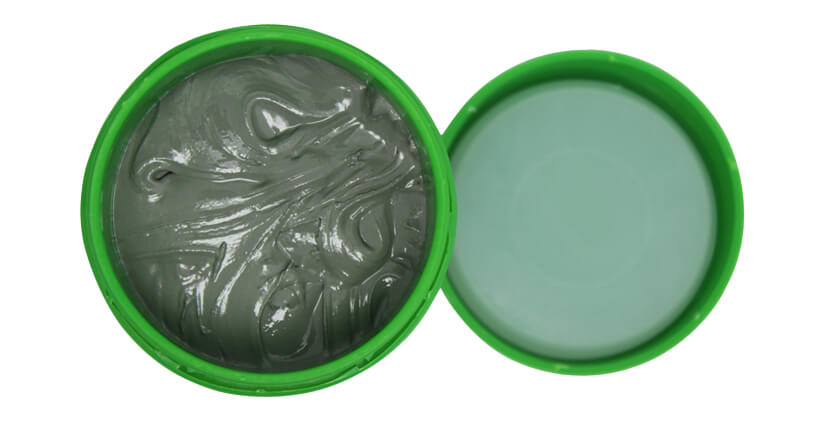
Red glue mesh shows unique advantages when dealing with complex working conditions: Large heat capacity component fixation: For large components such as BGA and QFP, the red glue mesh is designed into a ring glue dot (width 0.2mm) using the composite process of "peripheral red glue + center solder paste", which can effectively prevent warping during reflow soldering (controlled within 50μm). High-frequency circuit applications: Ceramic-filled red rubber with a dielectric constant of ε<3.5, combined with high-precision red glue mesh (cut-out tolerance of ±5μm), can reduce the transmission loss of 10GHz signal by 0.5dB/cm, meeting the performance requirements of 5G mmWave antennas. Lead-free process compatibility: For the high temperature (260°C) requirements of lead-free solder, silicon-modified epoxy adhesive is used in combination with high-temperature resistant mesh plate (316 stainless steel), which maintains 70% initial bond strength after 10 reflow solders.
3. Process selection framework and
technology development trend
3.1 Decision matrix and scenario adaptation
model
Multidimensional factors need to be
considered for process selection based on product characteristics:
1. Single-panel scenario: Prefer the solderpaste printing process, and the thickness of the screen board is designed
according to the component size tier - 0.08mm for the 01005 package and 0.12mm
for the SOIC package to ensure accurate matching of the amount of solder paste.
2. Double-sided scenario: Using the mixed
scheme of "A-side solder paste/B-side red glue", the red glue mesh
should avoid the position of the A-side solder joint, and the distance between
the edge of the glue and the pad should be ≥0.2mm to prevent the risk of short
circuit during wave soldering.
3. Large-size component scenarios:
Implementing the "solder paste + local dispensing" composite process,
such as QFPs above 5mm×5mm, can increase the reliability of solder joints by
40% by adding auxiliary adhesive dots at the four corners through a special red
glue mesh.
4. Extreme environmental scenarios:
High-temperature applications (such as engine control modules) require a
combination of high-temperature resistant red rubber (above 260°C) and 316
stainless steel mesh, which retains > 80% bond strength after 1000 hours of
aging test.
3.2 Technological innovation and future
evolution direction
Printing template technology is developing
rapidly in the direction of intelligence and long-term effectiveness:
nano-coating technology: deposit diamond-like (DLC) coating (thickness 2-5μm)
on the surface of the screen board, the surface energy can be reduced to less
than 20mN/m, the solder paste release performance is increased by 50%, and the
service life of the screen board is extended to 500,000 times, which is 3 times
higher than that of traditional screen boards. Intelligent Sensing Mesh Board:
Integrates micro pressure sensor (accuracy ±1kPa) and temperature sensor to
monitor the process parameters in the printing process in real time, and
uploads them to the cloud analysis platform through the industrial Internet to
achieve early warning of defects (accuracy > 90%). Multi-functional
Composite Template: Selective plating technology is used to achieve thickness
control (0.05-0.2mm) in different areas on the same screen board, meeting the
one-time printing needs of complex PCBs (such as containing 01005 components
and large connectors at the same time), and increasing production efficiency by
30%.
4. Engineering practice suggestions and
quality control system
4.1 Network board management and
maintenance specifications
Establishing a full life cycle management
system is the key to ensuring printing quality: Usage tracking: each screen
board is equipped with RFID tags, automatically recording the number of prints,
and when it reaches 20,000 times, accuracy detection is carried out (using 2D
image measuring instrument, accuracy ±1μm), and more than 50,000 forced scraps.
Periodic calibration system: Printing proficiency verification (CPK≥1.33) is
carried out quarterly, and the printing accuracy (deviation < 10%) and consistency
(CP≥1.67) of solder paste/red glue are evaluated by designing a standard test
plate (including a variety of typical pads). Cleaning process optimization:
Adopt "dry wipe + wet cleaning + vacuum" three-stage cleaning process
- dry wipe to remove surface residue, ultrasonic cleaning (40kHz) to remove
impurities in the hole, vacuum adsorption (-0.08MPa) to ensure dryness, so that
the cleanliness of the mesh board is increased to 99.5%.
First article verification and process
control
1. New board first article inspection:
Implement 3D SPI full inspection, focusing on: solder paste volume: deviation
controlled within ±15%, solder paste shape: height/diameter ratio 0.5-0.7, position
accuracy: center offset < 25% pad size
2. Process monitoring strategy: 5 PCBs are
extracted every hour for random inspection, and X-Ray is used to detect the
bottom solder ball of the BGA to ensure that there are no fatal defects such as
bridging and less tin, and the process capability index Cpk is maintained above
1.33. Current industry data shows that through the above optimization measures,
the defect rate of the solder paste printing process can be stably controlled
below 500ppm, and the application of red glue can increase the overall yield of
double-sided boards by 15-20%. For companies seeking customized solutions, it
is recommended to conduct DFM (Design for Manufacturability) analysis to
further improve production efficiency and product reliability through
collaborative optimization of network board and PCB design.
 苏公网安备32058302004438